
S T R U C T U R E D C A B L I N G S O L U T I O N S
The Silent Point of Failure: Why Structured Cabling Still Breaks Enterprise Networks
Ask any IT manager what keeps them up at night, and you’ll hear the usual list, ransomware, downtime, budget cuts. Almost nobody says “the cabling.” And that’s exactly the problem.
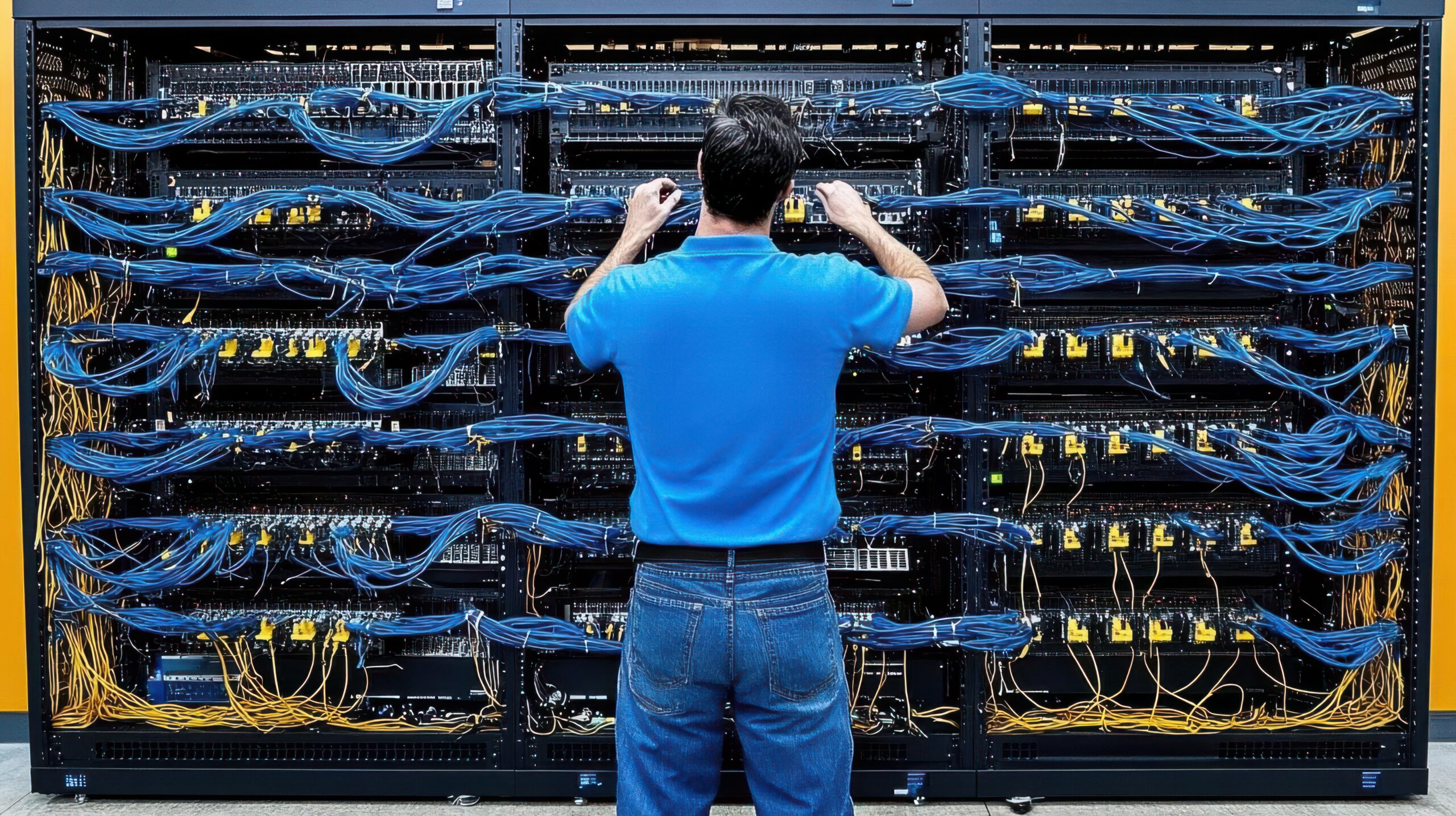
Structured cabling is the most literally hidden part of your network, behind walls, above ceilings, inside trunking. When it’s done right, it disappears completely. When it’s done wrong, it doesn’t fail loudly. It shows up as random slow connections, dropped calls on video meetings, or Wi-Fi that mysteriously struggles in certain areas, problems that usually get blamed on the router, the ISP, or “the network just being weird,” when the real issue is sitting quietly behind the wall.
Why the Cabling You Install Today Matters for the Next 10 Years
Unlike a switch or router that gets replaced every few years, cabling is meant to last well over a decade. That means whatever gets installed today either supports your network’s growth for years, or quietly becomes the ceiling that holds everything back.
This is becoming a bigger deal because of two things happening at once: more devices are being powered directly through network cables (like Wi-Fi access points, IP cameras, and smart building devices), and Wi-Fi speeds have gotten fast enough that older cabling can’t actually keep up with what a modern access point is capable of. In both cases, the cabling, not the device, becomes the bottleneck.
The current industry standard for new installations is a cable category called Cat6A. It’s the version built to comfortably handle both of those demands, power delivery and faster speeds, without the network hitting a wall in a few years.
What Actually Goes Wrong in Real Installations
A handful of patterns show up again and again in Philippine enterprises:
Cabling installed for yesterday’s needs. What was more than enough bandwidth a decade ago is quietly limiting everything you’ve upgraded since.
No documentation or labeling. When something breaks, troubleshooting turns into a guessing game, tracing cables by hand instead of checking a clear record.
Mixed vendors, no single point of accountability. Cabling from one supplier, connectors from another, installed by a third party. It might work fine, until there’s a warranty issue and nobody wants to own the problem.
Poor cable management. Beyond just looking messy, it causes real issues, blocked airflow that makes your room hotter, and cables that get accidentally disconnected during routine maintenance.
Why This Deserves More Attention Than It Gets
Companies today are pushing far more through their networks than they used to, video calls, cloud apps, security cameras, smart devices, all running at once. All of that assumes a cabling foundation that can actually keep up, and a lot of networks are quietly running on cabling that was specified for a much simpler set of needs a few years ago.
What a Properly Built Cabling Setup Actually Looks Like
- Built for where you’re headed, not just where you are. Cabling should account for growth, not just today’s device count, because redoing it later means opening ceilings again.
- Installed and tested to recognized industry standards, not just “whatever category sounded fine at the time.”
- Properly labeled and documented, so troubleshooting takes minutes instead of a half-day search.
- Backed by one warranty covering the whole system, cable, connectors, and panels together, so there’s a single point of accountability if something underperforms.
The Layer Everyone Forgets, Until It Costs Them
Structured cabling never gets a product launch or a keynote moment. But it’s the one layer that, when done right, simply disappears, no mystery slowdowns, no random disconnections, no guessing games. And when done wrong, it becomes the invisible limit on everything you’ve invested in above it.
Ardent Networks distributes Panduit that offers structured cabling solutions to channel partners serving enterprises across the Philippines, built for networks that need to perform today and scale for years ahead.
If your last cabling conversation happened years ago, or never happened at all, that’s worth revisiting before your next network upgrade, not after something breaks.